REZA WAHADJ
Data Scientist &
GeoSpatial Scientific Core
Architecture
GeoSpatial Research Consultant
GeoSpatial Strategist & Policy Maker
GeoSpatial Action Plan Evaluator
Data Scientist Evangelism
IoT Architecture
IoT-based Smart City Platform
Holistic Smart City Architecture
Project Feasibility Expert
Project Manager & Developer
28255 Via Fierro, Laguna Niguel
California, USA 92677
Tel: 949.302.2633
Fax: 949.822.0906
e: reza@hydroinfo.org
w: https://hydroinfo.org
REZAWAHADJ
Reza has over 25 years of experience in GeoSpatial Infrastructure & Water Resources, Water & Soil Engineering, GIS & Remote Sensing Cyberinfrastructure, GeoSpatial Service-oriented Architecture & Hydrologic Information Systems. He started his career in GIS and RS in the Mathematical Modeling and Simulation Department of Dam & Power Plant Research at the Ministry of Energy (Mahab Ghodss) in 1994 and the Department of Environment in 1995. Since then, Reza has been involved in numerous international projects, conducting research for more than nine different professional organizations and governmental agencies, as follows:GIS Manager of the National Partnership for Advanced Computational Infrastructure (NPACI) at the University of California, San Diego (UCSD), Supercomputer Center (SDSC), Spatial Information Systems Laboratory (SISL), Science Research & Development Division (SciRAD), Microsoft eScience Research Center, Environmental Systems Research Institute (ESRI), California Governmental Water District, Anadarko Petroleum Corporation (APC) [part of Occidental Petroleum Co.] , International Institute for Aerospace Survey and Earth Sciences (ITC), United States Geological Survey (USGS), Municipality of Glendale, Municipality of San Francisco County, and QBE North America.
His research interests include GeoSpatial Scientific Data Modeling, GIS & RS Cyberinfrastructure, GeoSpatial Ontology Processing, OGC & Open Standard Specifications in GeoSpatial, Sensor-oriented Satellite Modeling & Simulations, developing GeoSpatial strategies on a national and global scale to determine location and sensor-based datasets for improved decision-making, reducing risks and optimizing operations, Enterprise Geo-Database Architecture, GDAL Integration, IoT gateways in the GeoSpatial framework, Advanced Image Processing & Geoprocessing, and Enterprise Geo-Database Clustering Techniques.
Particularizing Sensor-oriented Satellite Modeling, CO2 concentrations on hydrological processes, utilizing API Level in NASA Real-Time Langley Research Center, HYGEOS/AERIS/ICARE Data DAAC, NASA's Atmospheric Science Data Center (ASDC), NASA's Goddard Earth Sciences Data and Information Services Center (GES DISC), NASA's Global Hydrology Resource Center (GHRC), Distributed Active Archive Center (DAAC), PO.DAAC, SEDAC, NSIDC, GES DISC, GIBS API, CMR, MODIS, AIRS, OMI, OMPS, LANCE (NASA Near Real-Time Data and Imagery), Oceans Near-Real Time (NRT) Data, Direct Readout Laboratory (DRL), EOSDIS Datasets, utilizing API Level in sophisticated NASA GIOVANNI Platform & Modeling for comprehensive real-time ocean and coastal analysis, ecological process from GeoSpatial pattern, pattern recognition, thermal and hyperspectral imagery, Landsat Program, MODIS Datasets, GDAL HDF-EOS API for MODIS-Terra image processing, USGS process-based model for MODFLOW & TOPMODEL, Global Land Data Assimilation System (GLDAS) Model (NASA), catastrophe modeling architecture & strategies, new IoT-based emergency modeling & disaster management.
Explicitly in Data Mining Techniques, Deep Learning Algorithm with R & Python, Resource Description Framework (RDF), Service-oriented architectures, Advanced XQuery Processing, Web Ontology Language (OWL), Mozilla Internet of Things (IoT) Gateway Architectures, Holistic Smart City Architecture, GeoSpatial IoT Architecture, IoT-based Smart City Platform, Multi-criteria Ontology-based Service-oriented Architecture, Data-driven decision making, and Decision Support Systems in Water Resources & Solar Energy.
AcknowledgementsI would like to express my deepest and sincere gratitude to my mentor and friend, Dr. Jim Gray, Microsoft Technical Fellow, Distinguished Scientist, and a genius with many great achievements at the Microsoft Research Center in San Francisco Bay Area. He personally supervised, supported, and encouraged me throughout this work. May his soul rest in peace forever.
I would also like to express my highest sincerity and gratitude to my manager, Dr. Ilya Zaslavsky, the Director of the Spatial Information Systems Laboratory at the University of California, San Diego (UCSD), Supercomputer Center (SDSC). He is a genius scientist with tremendous achievements in the history of GeoSpatial. He challenged me when I needed it and supported me when I needed it. Furthermore, I have learned many attributes and attitudes from him.

 Award
Award

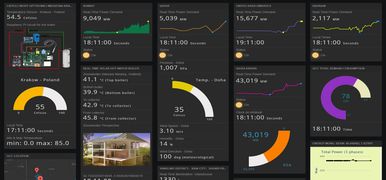
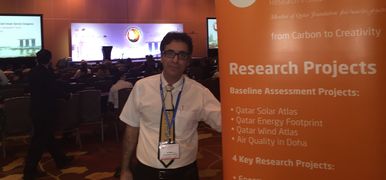
- Microsoft Azure Research Award: Developing real-time IoT Monitoring & BIGDATA Harvesting Storage System for Energy Demand Response in GCC Countries Award Date: June 30, 2016 Award CRM: 0518327
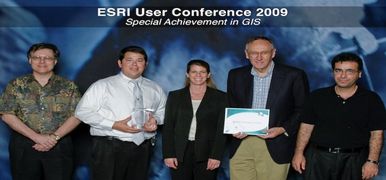
- ESRI Special Achievement in GIS (SAG) Award: Developed a unique Real-time Catastrophe Manager Analysis Tool set with Comprehensive Risk Management API Award Date: July 15, 2009
- Microsoft Jim Gray eScience Award: Hydrologic Data Dissemination & Analysis API for USGS NWIS, EPA STORET, NEXRAD, AmeriFlux & National Climatic Data Center (NCDC) Award Date: Oct 20, 2006
- NSF Award: Cyberinfrastructure Summer Institute for Geoscientists
San Diego Supercomputer Center (SDSC) Award Date: July 28, 2004 Award Number: 0432080
TEACHING
Cyberinfrastructure Summer Institute for Geoscientists
San Diego Supercomputer Center, CA, USA
CONFERENCES, PAPERS & JOURNALS
- Forward Osmosis for Irrigation Water Supply Using Hybrid Membrane System for Draw Solution Research area: Qatar Foundation, Doha, Qatar June 2017, University of Technology, Sydney, New South Wales, Australia Publisher: CRC Press Published Date: 2018
- Qatar Dynamic Solar Atlas & Solar Resource Assessment: International Solar Energy Society, ISES Solar World Congress 2015 Qatar Environment & Energy Research Institute (QEERI)The IEA Solar Heating & Cooling Technology Collaboration Prog. (SHC TCP) Report: Proceedings 8-12, Nov 2015, Daegu, South Korea
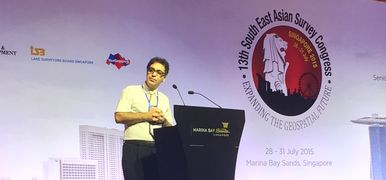
- Advanced GeoSpatial Integration in Solar Energy & Water Resources Qatar Environment & Energy Research Institute (QEERI) 28th-31st July 2015 Marina Bay Sands, Singapore
- Catastrophe Modeling: ESRI International User Conference (Award) July 15, 2009 San Diego, CA, USA
- Evaluation of Landscape Structure in Eram Park using GIS International Journal Environ. Res., 1(3): 258-263, 2007 ISSN: 1735-6865
- Toward a Distributed Information System for marine biology and limnology March 3, 2007 San Diego, CA, USA
- CUAHSI HIS Cyberseminar October 28, 2006 Austin, Texas, USA
- HDAS: A scalable system for online access to national and local repositories of hydrologic time series, Geoinformatics 2006 International Conference May 10-12, 2006 Reston, Virginia USA
- Developing a CUAHSI HIS Data Node as Part of Cyberinfrastructure for the Hydrologic Science May 10-12, 2006 Reston, Virginia USA
- ESRI Federal User Conference Jan 31, 2006 Washington, DC USA
- CUAHSI Web Services & Hydrologic Information Systems Nov. 30, 2005 Austin, Texas, USA
- Microsoft Research eScience Workshop: Review HydroInfo Core Architecture Oct. 6-7, 2005 Redmond, WA USA
- Microsoft Research SciData, Scientific Data Intensive Computing May 25-26, 2004 Redmond, WA USA
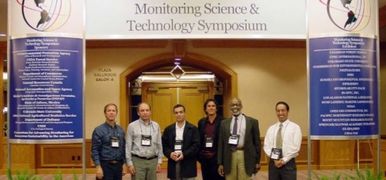
- Linking Science & Technology to Policy & Planning for Sustainable City-Region Development. The EPA's Monitoring Science and Technology Symposium United States Environmental Protection Agency (EPA)Sep. 21-24, 2004 Denver, Colorado USA
- TerraShake Simulation, Envision Journal, Discover Cyberinfrastructure University of California, San Diego (UCSD)Supercomputer Center (SDSC)Special Issue, 2004 San Diego, CA, USA
PROFESSIONAL AFFILIATIONS
- Member of Microsoft eScience Research Group Since 2004 (eScience)
- Member of USGS Earth Resources Observation & Science Center (EROS)
- Member of The Environmental Systems Research Institute (ESRI)
- Member of The Open Geospatial Consortium (OGC)
- Member of US Geospatial Platform (Geospatial Platform)
- Member of Microsoft Developer Network (MSDN)
- Member of United Nation Institute for Training and Research (UNITAR)
- Member of The California Geographic Information Association (CGIA)
PROFESSIONAL COLLABORATORS
- Dr. Ilya Zaslavsky, Ph.D., Director of Spatial Information Systems Lab at The University of California, San Diego (UCSD), Supercomputer Center (SDSC) w:..//www.sdsc.edu/~izaslavsky w:..//earthcube.org/geo.web.services
- Dr. David R. Maidment, Ph.D., Director of the Center for Research in Water Resources at The University of Texas w:..//caee.utexas.edu/prof/maidment/CAEE w:..//caee.utexas.edu/prof/maidment/gishydro w:..//caee.utexas.edu/prof/maidment
- Dr. Amarnath Gupta, Ph.D., Director of Advanced Query Processing Lab at The University of California, San Diego (UCSD), Supercomputer Center (SDSC)w:..//uc.sdsc.edu/~Gupta
- Dr. Susan Hubbard, Ph.D., Lawrence Berkeley National Lab (UC Berkeley) w:..//eesa.lbl.gov/susan-hubbard/
- Dr. Norman Miller, Ph.D., Lawrence Berkeley National Lab (UC Berkeley) w:..//cpaess.ucar.edu/~nmiller
- Dr. Upmanu Lall, Ph.D., The Columbia University w:..//columbia.edu/~upmanulall
- Dr. Dennis Lettenmaier, Ph.D., The University of California, Los Angeles w:..//geog.ucla.edu/~dlettenmaier
- Dr. Michael Piasecki, Ph.D.,The City College of New York w:..//ccny.cuny.edu/~mpiasecki
- Dr. Deb Agarwal, Ph.D., Lawrence Berkeley National Lab (UC Berkeley) w:..//dst.lbl.gov/~deba
- Dr. Zheng Chunmiao, Ph.D., Shenzhen Institute of Sustainable w:..//sustech.edu.cn/zchunmiao
- Dr. David G Tarboton, ScD, Utah Water Research Lab, Utah State University w:..//uwrl.usu.edu/facultyw:..//hydrology.usu.edu/dtarb
- Dr. N. Leroy Poff, Ph.D., Stream Ecology Lab, Colorado State University w:..//pofflab.colostate.edu/
- Dr. Larry Band, Ph.D., The University of Virginia w:..//eng.virginia.edu/larry-band
- Dr. Anton Kruger, Ph.D., The University of Iowa w:..//engineering.uiowa.edu/faculty
- Dr. Kenneth H. Reckhow, Ph.D., Duke University w:..//nicholas.duke.edu/people
- Dr. Peter Harrell, Ph.D., Duke University w:..//people.duke.edu/~pharrel
- Dr. Praveen Kumar, Ph.D., The University of Illinois w:..//cee.illinois.edu/directory
- Dr. Wendy D. Graham, Ph.D., The University of Illinois w:..//waterinstitute.research.ufl.edu/faculty
- Dr. Xu Liang, Ph.D., The University of Pittsburgh w:..//engineering.pitt.edu/people/faculty
- Dr. Venkataraman Lakshmi, Ph.D., University of Virginia w:..//engineering.virginia.edu
- Dr. Tim Lee Whiteaker, Ph.D., Texas University At Austin w:..//jsg.utexas.edu/researcher



Microsoft Azure Research Project
Funded by the Microsoft Azure Research Center on June 30, 2016 Doha, Qatar
This project was awarded to me and the Microsoft Azure Research Center in June 2016 to develop a Real-Time IoT Monitoring & BIG DATA Harvesting Storage System for Energy Demand Response in the Middle East Region (GCC Countries).
Project Proposal Abstract & Research HypothesesGulf Cooperation Council (GCC), the political and economic alliance of six Middle Eastern countries including Saudi Arabia, Kuwait, the United Arab Emirates, Qatar, Bahrain, and Oman, has recently faced oil prices falling to their lowest level since 2003. The effects of falling prices are being felt by economies around the world. However, oil-producing nations that rely on exports have been particularly hard hit, with many now experiencing social and, in some cases, political impacts.
The goal and scope of this project are to harvest, monitor, and forecast energy demand response data across the GCC countries to help each country in energy usage. This includes monitoring and storing historical Big Data in a real-time cloud-based architecture at the regional scale. The historical datasets and real-time monitoring will be utilized in IoT in conjunction with Microsoft Azure Cloud, making them accessible for researchers and governmental institutions from the Microsoft Azure Cloud for developing IoT applications.
Research Approaches & Technical DesignAt the beginning, we started without adhering to standard academic approaches that typically fall into deductive or inductive methodologies for each hypothesis. Instead, we decided to investigate the crucial importance of this project based on a practical and political understanding of the Gulf Region during the current energy crisis. This strong motivation drove our investigation. We proposed several hypothesis scenarios as solutions to educate, motivate, and help the community of the GCC understand the future of energy demand and take appropriate action before time runs out.
With this in mind, we initiated the harvesting of electricity datasets across all six countries, with a time interval of 5 seconds, storing them in Microsoft SQL Server on three different computers. Starting around June 2015, we now have 12 million electricity datasets, which can guide us in future modeling and forecasting. This is the first major step towards developing and integrating solutions.
The code has been written in Microsoft C# in cooperation with SQL Server over the HTTP Protocol. It runs every five seconds, harvesting electricity demand data from the Saudi Arabia Command Center in the Dammam region (close to Bahrain). The data is streamed into SQL Server, and simultaneously, raw data is also streamed into an IoT real-time dashboard in JSON format.
Since June 2015, we have been involved in this initiative by architecting and developing real-time IoT infrastructure for all six members of the GCC countries as backbone infrastructure. Currently, we have 120 million record sets in SQL Server.
However, since this project will address the real problem at the scale of the Gulf Region by covering all six countries simultaneously in real-time energy consumption demand, we are evaluating our current resources.
We are scaling out cloud-based processing not only for our storage but also for real-time demand response for each additional country.
IoT ArchitectureOur architecture supports SOAP/ XML as well as RESTful / JSON format to address any application using such formats. Currently, we are using cloud-based accounts for our real-time streaming data with limited resources from several known IoT companies, such as ThinkSpeak, Xively, and PubNub, to close the technical loop without losing real-time datasets. This was a major step following our investigation.
The stream data flow (see the project summary description - below), as well as the entire architecture in detail with respect to IoT. It includes all resources such as Python Modelling, RESTful JSON, C# WebJobs, NodeJS Server, ETL SSIS, SSRS, SSAS, Raspberry Pi board, SQL Server, and the Forecasting Algorithm.
The dashboard is real and operational internally on our server back-end. It will be launched in the public domain soon, once we have tested and ensured that all parts of the model function properly.
Feasibility ReviewThis project is exactly suitable for Microsoft Azure Cloud or any other cloud platform, consisting of state-of-the-art real-time data actuation, on-the-fly analysis, monitoring through suitable dashboards, and cloud storage for future historic modeling and forecasting. We have all the necessary resources to achieve this goal and have been working on it since June 2015 from home.
This initiative will also encourage researchers and engineers from all six GCC countries to access energy demand response datasets synchronously, based on their local timestamps.
Meanwhile, the ultimate goal is to encourage GCC countries to migrate their datasets to Microsoft Azure Cloud by successfully executing this case study, which includes forecasting modeling, real-time monitoring of energy demand data, and data storage services. This project can easily be customized for any data science field, such as water data, meteorology data, healthcare data, etc., in the Middle East region.
Project Summary Description: [Click here to download PDF]
Project Materials, Downloads and Related Resources:IoT Architecture: [w:..//iot.archit] IoT Developed Interface: [w:..//iot.inter]
Microsoft eScience Research Project [HydroInfo Initiation Phase]
Funded by the Microsoft Research Center on Oct. 20, 2006, San Francisco, CA, USA
The project was awarded by the Microsoft eScience Research Center on October 20, 2006, in San Francisco. It was a collaboration between me and my mentor, Jim Gray who was a genius scientist and the manager of the Microsoft Research Center in the San Francisco Bay Area, USA. To learn more about Jim and his achievements click here.
The primary objective of the HydroInfo Project was to produce a comprehensive data warehouse/portal that integrates hydrologic data sources. This involves data storage/management and manipulation when necessary to eliminate inconsistencies within a single data source as well as among different data providers.
Inconsistencies may be encountered within data due to issues with data quality (e.g., measurement values mixed with text), use of different units (e.g., ft/sec vs. m/sec), or temporal resolutions (e.g., daily value vs. weekly average).
There are also semantic problems since data providers use different nomenclatures when naming parameters. Moreover, not every parameter has a counterpart in another dataset. The National Water Quality Monitoring Council points out that one EPA STORET parameter can be mapped with more than five NWIS parameters, while none of them are exact matches. In the proposed system, semantic mediation will be handled using ontologies rather than at the database level. The system will also exploit the data mining and XML support capabilities of Microsoft SQL Server 2005. Clearly, success in data management is essential for reliable end-user services.
A good front-end complements a reliable back-end. Recognizing this, the envisaged system will include a portal to help scientists easily access different types of data, observe changes in desired areas over time, and export data to their favorite hydrologic data analysis applications. Priorities will be given to MS Excel, ArcGIS, MatLab, Python, and R, while customized outputs will also be supported, considering that hydrologists often develop their own FORTRAN codes. Since analyzing large datasets may require transferring huge amounts of data, services will be offered for server-side analysis, providing more flexibility to users. Time series analysis and extreme value statistics are a few examples from this toolbox.
To expose the system to developers and advanced users, web services will also be provided within the .NET framework system when necessary for better performance.
HydroInfo Server System
A clustered search mechanism (implemented using the Microsoft .NET platform) will enable users to search data across different domains using a single keyword, with results classified according to differences such as parameter names and measurement methods. The search engine will also enable inferred results, where searching for a keyword like 'pesticide' will trigger searches for hundreds of chemical compounds. This inference capability, coupled with the clustered search approach, is a powerful tool and a solution to problems arising from using too specific or too general search keywords, resulting in no results and too many irrelevant results respectively.
The system will also include a knowledge base of key processes and their interactions to identify resource management alternatives and provide decision support. This gives the system a monitoring interface function, making individual measurement values or a group of measurements meaningful to the system.
For this purpose, the most critical parameters, especially those subject to management, that regulate the system and control hydrological and biotic linkages will be identified using investigators domain knowledge, in addition to extensive statistical analysis (including but not limited to sensitivity analysis) coupled with the use of appropriate hydrologic models.
Project Summary Description: [Click here to download PDF]
Project Materials, Downloads and Related Resources:Jim Gray Biographical Memoir - National Academy of Sciences: [w:..//jim.gray.memoir.NASci] Hydroinfo Initial Proposal to Microsoft: [w:..//hydroinfo.init.prop] Hydroinfo Microsoft Award & Sub Projects, Microsoft eScience Research Workshop 2005: [w:..//microsoft.eScience.2005] TerraService.NET - Web Services:[w:..//terraservice.net] Technical Memorandum - NOAA-GLERL: [w:..//tech.memo.noaa.glerl] Statistical Methods in Water Resources: [w:..//stat.water] The State of Hydrological Services in Developing Countries: [w:..//s.hydro.ser.dev.co]
GeoSpatial Infrastructure Project
Qatar Foundation - Qatar Environment & Energy Research Institute, Doha, Qatar
Development of GeoSpatial Infrastructure for Qatar has been started in early 2015 with several objectives: architecture, design, encoding, testing, and deployment of GeoSpatial Infrastructure throughout the country, with the ultimate goal of integration with other GCC partners in the Middle East region.
The GeoSpatial Data Survey Report was carried out by Richard Wood (Former QF GIS Specialist) in 2014. [Download Full Data Survey Report].
The GeoSpatial & Remote Sensing Road Map was proposed and approved by me in 2015. [Download Full Architecture Schema].
Our primary goal was to introduce this infrastructure framework by fostering and promoting Qatar to the GeoSpatial community in the GCC and around the world. The framework is robust enough to support both Qatar Foundation initiatives in Water Security and Solar Energy. The first case study was implemented in Solar Energy with several objectives to address Qatar's solar energy needs for the upcoming years.
For the first objective, addressing energy security, QF aims to assist and expedite the introduction of off-grid and grid-integrated photovoltaic and energy storage technologies by providing scientific and engineering solutions for the deployment of 1GW solar power in Qatar. This will be achieved through four thrust areas: solar energy, energy storage, grid integration, and energy efficiency.
Here are some initiatives in recent years with respect to renewable sources in Qatar:- Qatar aims to generate 20% of its energy from renewable sources by 2024 and have 1800 MW of installed green capacity by 2020.
- 1 billion US$ investment for producing poly silicon at Ras Laffan, which can cater to produce photovoltaic panels generating 6.5 GW at full capacity.
- The 2022 FIFA World Cup in Qatar will be the first carbon-neutral World Cup, using solar energy for air conditioning and fan zones.
- During COP18, an MOU was signed with the International Renewable Energy Agency (IRENA) for the Global Renewable Energy Atlas Initiative.
- A 200 MW power project is underway by Kahramaa (Ministry of Power & Water).
GeoSpatial Solar Energy Development in Qatar had three phases and several stages and processes. The analysis of solar irradiation components was measured through ground monitoring stations combined with data derived from satellite imagery. DNI, DHI, and GHI are calculated from Meteosat Second Generation (MSG) satellite HRV channel using a model based on Heliosat-II and III models every 15 minutes. By collecting real-time datasets, re-projecting from GEOS projection to GEODESY projection, extracting DNI, GHI, and DHI values from raster datasets, loading them into SQL Server Spatial, pre-processing, post-processing, generating geometry in SQL Spatial, classification process, generating metadata, generating ESRI Map Service API, analyzing the Map Service, pushing to Server API, running Verification Analyzer, opening VPN channel over the server, and many more steps, to learn more in detail about each process and step, please click on the Resource Section below:
Project Full Description: [Click here to download PDF]
Project Materials, Downloads and Related Resources:Comprehensive GeoSpatial & Remote Sensing Roadmap: [w:..//Comprehensive.Roadmap.qa] GeoSpatial Ontology-based Schema in SOA: [w:..//Ontology.Schema.qa] GeoSpatial GIS Lab: [w:..//GIS.Lab.qa] Real-Time GeoDoha-Desktop - SQL Server & ESRI ArcGIS: [w:..//geoDoha.Desktop.qa] Meteosat Second Generation (MSG) Satellite HRV channel Geostationary Projection (C code): [w:..//MSG.Satellite.GEOS.HRV.C]
Catastrophe Modeling Project
Balboa Insurance Group - Now part of QBE North America, Irvine, CA, USA
It was a collaboration between Balboa Insurance Group & ESRI (Redlands, California). The Catastrophe Modeling Project was an real-time risk analysis project with many real-time toolsets developed over five years and enhanced annually by adding new modules for monitoring specific risk analysis of hurricanes and other major catastrophe events in the USA.
The core engine was prototyped and encoded in Python Script and in some areas in C#.NET. CAT Manager received its datasets at the time of a hurricane from organizations such as the National Hurricane Center, National Oceanic and Atmospheric Administration (NOAA), the U.S. Geological Survey (USGS), and AccuWeather.
The datasets arrived in a timely manner (normally every 10 minutes) to an FTP server securely linked with the above organizations. The Python Script handled the critical task of pulling each polygon delineation of the hurricane, creating spatial boundaries in the Enterprise GeoDatabase (ArcSDE for SQL Server) on the fly, and internally linking spatial query requests with Oracle Loan Lender Tables.
With this highly accurate data, Balboa clients could more precisely map where loans were at risk due to the high probability of property damage during catastrophic events.
There is no predicting when or where a force of nature will strike. But when they do, lenders need to act immediately to assess the damages to their investments and help their borrowers begin to recover and rebuild. By providing our clients with the tools of Catastrophe Manager, Balboa Insurance Group offered a valuable solution to a critical problem: being able to assess their exposure and be as proactive as possible. By providing catastrophe information and assessing the possible impact on each individual loan included in the portfolio, Balboa offered a solution to a crucial problem: being aware of additional risks, with as much warning as possible.
The website also provided archived data, allowing clients to use previous catastrophe information as an indication of the potential effect those past catastrophes would have on current portfolios.
ESRI Press Release:Utilizing GIS for a variety of tasks including managing risk accumulation, determining effective rates for various geographic regions, and visually representing risks so the executive management team can make timely and pragmatic decisions. Since implementing its GIS in 2005, Balboa developed the Catastrophe Manager website as a tool for providing loss assessments to its Financial Institution clients.
Jack Dangermond, ESRI president's comments during CAT Modeling Award on July 2009:"Our world is being challenged by rapid change, says Jack Dangermond, ESRI president. The GIS technology is increasingly being deployed as a way to understand the issues facing our society. At ESRI, we are always extremely impressed with the work of our users and want to recognize their efforts with our Special Achievement in GIS Award. Their work is a great example of using GIS to improve our world."
It was kind of real-time state of the art.
Project Summary Description: [Click here to download PDF]
Project Materials, Downloads and Related Resources:ESRI Special Achievement Award Winner 2009: [w:../e.esri.com/cf/sag1024] ESRI Press Release 2009: [w:../e.esri.com/press] Catastrophe Models Full Report: [w:../cat.modeling.report] Catastrophe Models & Insurance: [w:../cat.modeling] Managing Risk in the Worst of Times: [w:../cat.modeling.business] ESRI Best Practices 2012: [w:../esri.com/bp.pdf] ArcWatch ESRI e-Magazine Nov. 2009: [w:../esri.com/arcwatch] Cyber Catastrophes with RMS System: [w:../rmsCyber-catastrophes]
GeoSpatial Investigation & Discovery Project
Anadarko Petroleum Corporation (APC) [part of Occidental Petroleum Co.], Houston, Texas, USA
The purpose of this project is to conduct an international APC GIS data inventory to develop an accurate and up-to-date overview of primary data sources in the area of GIS and Remote Sensing in order to identify and provide the necessary foundation of information required in a global APC planning effort. The goal of the inventory was to assess the resulting product, which will be utilized in identifying, analyzing, and evaluating alternative methods for implementing such a planning process.
Given the universal need in any APC resource planning activity for baseline categories of GIS data, image processing, online mapping, etc., this project will not only complement and assist in determining goals and objectives but also provide valuable information needed to allow APC planners, architects, and consultants to "hit the ground running" in evaluating planning alternatives and implementing GIS/RS strategies.
The inventory focused on, but was not limited to, available digital spatial data. Both attribute datasets and geographic information system layers were inventoried, with an emphasis on cataloging current APC GIS data resources. Completion of the inventory involved four major tasks:
- Scoping inventory content
- Identifying primary data sources
- Determining data status
- Summarizing and assessing inventory results
The first task involved developing the scope of the data inventory in terms of data themes or categories to be addressed (e.g., geology data, climate, land lease data, wells data, etc.). The second task involved identifying all primary sources for each data category. The third task was to characterize the content, level of detail, completeness, and correctness of each source. Finally, the inventory assessed the available data source options and their advantages/limitations within each thematic category.
Project Full Investigation Report Available for download at: [Click here to download PDF]
Project Materials, Downloads and Related Resources:Anadarko Operations Report 2016: [w:..//anadarko.operations.report.2016]
ArcGIS Server API Development Project
Anadarko Petroleum Corporation (APC) [part of Occidental Petroleum Co.], Houston, Texas, USA
Contracted as GIS Consultant, I was requested by Anadarko Petroleum Corporation (APC) to extend the ESRI prototype to ESRI Server Object Extensions (SOEs) by developing an extremely customized detail-oriented task API under SOE in the .NET framework. The Server API prototype was outlined several times to ensure all requirements were met at the time of implementation and encoding.
APC has several offshore undersea oil wells in the Gulf of Mexico, most of them in deep water, such as the Heidelberg field, which is located in the Gulf of Mexico, about 225 km offshore of Louisiana, USA, at a water depth of 1,620 m (5,310 ft).
Anadarko is the operator of the Heidelberg field with a 31.5% interest. Other partners for the field development include Marubeni Oil and Gas (12.75%), Eni (12.5%), Apache Deepwater (12.5%), StatoilHydro (12%), ExxonMobil (9.3%), and Cobalt (9.3%).
The purpose of this project was to develop the ESRI SOE API to address each shared oil well operator in the contract of operation with extremely detailed well information reports and tasks involved at the time of operation. The ESRI SOE Task API was later plugged into the ArcGIS Server Pool for access across the domain. Enterprise Geodatabase (ArcSDE) had a critical role here to manage all GeoSpatial data queries over the ArcServer SOE API.
Project Summary Description: Anadarko ArcGIS Server Development [Click here to download PDF]
The Consortium of Universities for the Advancement of Hydrologic Science, Inc. (CUAHSI) is an organization representing more than 130 universities in the United States and international water science-related organizations. It aims to develop infrastructure and services to support the advancement of hydrologic science and education.
CUAHSI receives support from the National Science Foundation (NSF) to develop infrastructure and services for the advancement of water science in the United States. CUAHSI's core operations are supported by a five-year grant from the Earth Sciences Division of the National Science Foundation (NSF).
The CUAHSI Hydrologic Information System (HIS) project, also supported by the National Science Foundation, has been in operation since April 2004 and will run for a period of seven years. This project is being conducted by a group of academic hydrologists collaborating with the San Diego Supercomputer Center (SDSC) as a technology partner. The HIS project is intended to produce a prototype Hydrologic Information System to perform the most critical functions needed to advance hydrologic science in U.S. academic institutions, and to define the scope and extent of a more complete CUAHSI Hydrologic Information System that could be created with further investment by NSF after the end of this project. CUAHSI anticipates that NSF will hold a competition in 2005 for a major investment in Hydrologic Observatories, for which 24 candidate watershed regions have been proposed by groups representing CUAHSI member universities throughout the United States.
On December 17, 2005, Reza and SDSC GIS Lab joined Environmental Research Systems Institute (ESRI) team to collaborate on the CUAHSI project and ESRI Arc Hydro Objects.
Project Summary Description: [Click here to download PDF]
NSF Award: [w:../nsf.gov/Award] Scalable System for Hydrologic: [w:../scalable.system.hydrologic] CUAHSI by Dr. Maidment: [w:../cuahsi.Dr.Maidment] CUAHSI HDAS: [w:../cuahsi.HDAS] Observations Data Model (ODM): [w:../Obs.model.odm] Geoinformatics 2006 Abstracts: [w:../Geo.2006.abs] CUAHSI Metadata: [w:../cuahsi.uc.berkeley.edu] CUAHSI Roadmap: [w:../cuahsi.roadmap] CUAHSI Review 2004: [w:../cuahsi.review.2004] Real-Time Visualization for USGS Data: [w:../arc.realtime.vis.USGS.Data] Sixth Biennial Colloquium: [w:../sixth.biennial.colloquium] SRP Water CUAHSI HIS: [w:../water.cuahsi.his] Tucson ARS AG ICRW:[w:../tucson.ars.ag.gov/ICRW]
The GEON initiative project was started in 2002 as a Collaborative Research Project among a dozen PI institutions, funded by the NSF Information Technology Research (ITR) program, to develop cyberinfrastructure for Earth Science data sharing and integration. Much of the core GEON cyberinfrastructure is generic and broadly applicable beyond Earth Sciences and Geosciences and has been leveraged by many other projects in earth sciences, as well as archaeology, ecology, environmental science, and earthquake engineering.
GEON is the second largest US NSF Award for the GEOscience Network, a collaboration of information-technology and geoscience researchers to create a modern geoinformatics cyberinfrastructure for the earth sciences. GEON will provide interlinked information systems to enable the geosciences community at large to share not only data and information but also tools and programs that will let them collaborate more effectively than ever before. The Supercomputer Center (SDSC) is the lead player, with IT research coordinated by Chaitan Baru, co-director of SDSC's Data and Knowledge Systems program. Other participants on the IT portion of GEON include the United States Geological Survey (USGS), as well as scientists at Pennsylvania State University, UCSD Jacobs School's CSE department, and San Diego State University. The total budget of this project is $11.25 million, with $5.6 million allocated to UCSD.
GEON seeks to bring leading-edge information management research to bear on creating a cyberinfrastructure for solid earth GeoSciences to interlink multidisciplinary geoscience data sets in 4D space. The need to manage the growing amount of diverse Earth science data has been recognized through a series of NSF-sponsored community meetings on Geoinformatics. The GEON collaboration between IT researchers, who represent key technology areas relevant to GEON, and Earth science researchers, who represent a broad cross-section of Earth science sub-disciplines, will provide the foundation for a national Geoinformatics program.
There is a pressing need in the Earth sciences for a national information infrastructure that enables the community to share databases and tools to enable interdisciplinary analysis of networked data sets in studying a wide range of phenomena, including the interplay between tectonics and the evolution of sedimentary basins; the role of mountain building in the evolution of climate and life; broader predictive understanding and modeling capabilities of geologic hazards, such as earthquakes and volcanoes; the 4D reconstruction of the Earth through time; and managing the natural resources of our planet. Each of these problems requires interdisciplinary research to discover relationships among Earth science disciplines, and depends on the community's ability to construct an integrated geoscience information system. The goal of GEON is to develop the necessary IT foundations and create such a system.
Many past and ongoing projects in geosciences have produced valuable sub-disciplinary and disciplinary databases. Numerous national centers and organizations such as IRIS, UNAVCO, the National Center for Ecological Analysis and Synthesis (NCEAS), the Southern California Earthquake Center (SCEC), as well as government agencies such as the U.S. Geological Survey (USGS), are contributing research and data to the community. Building on this basis, the imperative now is to take a step beyond research resulting in disciplinary databases towards a new paradigm for interdisciplinary information integration and tool sharing via the creation of the GEON cyberinfrastructure. The research products and services arising from GEON will be available to the entire scientific community and will transform the way in which geoscience research is conducted, opening unprecedented avenues for research and collaboration and providing the foundation for creating geoscience collaborators.
Project Summary Description: [Click here to download PDF]
[w:../acid.sdsc.edu/geon] [w:../calit2.net/article] [w:../nsf.gov/Award] [w:../geon.earth.cube] [w:../geon.fgit..data.CHALLENGES] [w:../geon.dlese.org] [w:../geon.starting]
The Biomedical Informatics Research Network (BIRN) is a US National Institutes of Health (NIH) initiative that fosters distributed collaborations in biomedical science by utilizing information technology innovations. Currently, the BIRN involves a consortium of 21 universities and 30 research groups that participate in one or more of three test bed projects centered around brain imaging of human neurological disorders and associated animal models. The BIRN mission is to accelerate discovery science by creating and fostering a new biomedical collaborative culture and infrastructure.
The BIRN Network, under the direction of UC San Diego Professor Mark Ellisman and funded by the National Institutes of Health/National Center (NIH) for Research Resources, is an innovative and award-winning geographically distributed virtual community of shared resources offering tremendous potential to advance the diagnosis and treatment of disease.
[w:..//sdsc.edu/BIRNnews] [w:..//ncbi.nlm.nih.gov/PMC3128398] [w:..//ninds.nih.gov/Clinical-BIRN]The BIRN is a national center for research resources, with a cyberinfrastructure for storing, manipulating, and sharing data and resources. Current BIRN test beds focus on neuroscience and neuroimaging, specifically human MRI and fMRI, and mouse models of neurological disease.
UCSD's National Center for Microscopy and Imaging Research (NCMIR) supplies high-resolution light and electron microscopic data on mouse models of neurodegenerative disease for the Mouse BIRN. They have developed an online database, the Cell Centered Database, and a Subcellular Anatomy Ontology (SAO), which is searchable in the OBO Foundry (Open Biological and Biomedical Ontology Foundry).
On October 25, 2002, officials confirmed that the BIRN Network Operations Center-NOC or "BIRN Central" is located at the San Diego Supercomputer Center (SDSC), also at UCSD. It will be linked to the research centers that shared in the NCRR award: Duke University in Durham, North Carolina; Harvard's Massachusetts General Hospital and Brigham and Women's Hospital in Boston; Caltech in Pasadena, California; UCSD's School of Medicine; and the University of California-Los Angeles. Participants will collaborate on sub-projects involving mouse and human brain images. The so-called Mouse BIRN will address a neurological disorder similar to multiple sclerosis, as well as changes in brain dopamine levels (like those found in Parkinson's disease and schizophrenia). The initial clinical focus in the Brain Morphology BIRN project (human subjects) will be on depression and Alzheimer's disease.
Utilizing GIS Technologies such as ArcXML in a Grid-based GIS tool for spatial integration of multiscale distributed brain data in the Smart Brain Atlas ... see the below article:
Project Summary Description: [Click here to download PDF]
Project Materials, Downloads and Related Resources:More articles on BIRN Project can be found at my repository: [w:..//Brain.Atlases.GIS] [w:..//Integrating.digital.atlas.brain.WPS] [w:..//Multi.Glial.Arch.Health.Disease] [w:..//Etra.GIS.Health]
SeaMounts Project
NSF Award - Undersea Mountains, Seamount Ecology [Moore Project]. University of California, San Diego (UCSD), Supercomputer Center (SDSC), CA, USA
SeaMounts was a funded by the National Science Foundation (NSF) project proposed on November 1, 1999, and started on December 1, 2000. The goal of this project were to: 1❩ Create and compile a multidisciplinary Geodatabase in a GIS system on seamount datasets that will be accessible to the scientific community through a World Wide Web interface. 2❩ Utilize the GeoDatabase to produce large-scale maps of biodiversity and endemism on seamounts. 3❩ Test hypotheses regarding the environmental conditions that support those patterns by applying the genetic algorithms of the GARP Modeling System. The work was conducted at the University of California, San Diego (UCSD), where the advanced computing facilities of the San Diego Supercomputer Center (SDSC) were combined with the broad oceanographic expertise of the Scripps Institute of Oceanography (SIO) providing an ideal environment for this research.
GARP Modeling System (developed 1999, courtesy by David Stockwell, davids@sdsc.edu)
The GARP Modeling System (GMS) is an acronym for Genetic Algorithm for Rule Set Production. GMS is a set of modules primarily designed for predicting the potential distribution of biological entities from raster-based environmental and biological datasets. The modules perform a variety of analytical functions in an automated way, making rapid unsupervised production of animal and plant distributions possible.
GMS modules have the ability to perform automated predictive spatial modeling of the distribution of species of plants and animals. The essence of the system is an underlying generic spatial modeling method that filters out potential sources of errors. This approach is generally applicable, as statistical problems arising from arbitrary spatial data analysis potentially apply to any domain. For ease of development, GMS is integrated with existing databases, visualization tools, and internet browsers. GMS is an example of a class of application that has been very successful in providing spatial data analysis in a simple-to-use way via the internet.
We have utilized David Stockwell GMS modules and built a Web Service API in the C# .NET framework and extended it as an Object Level to access its properties and methods by remote RPC calling inside the code. This also helps any developer who intends to utilize such a method by calling the API remotely to perform the same encoded process as we did, since the Service API and maintained data sources physically reside at the San Diego Supercomputer Center (SDSC).
Project Summary Description: [Click here to download PDF]
Project Materials, Downloads and Related Resources:The full datasets from SeamountsOnline can be downloaded in zipped CSV files at the below URL:
[w:..//sea.sdsc.edu/SeamountsCSV.zip] [w:..//toward.distributed.info] [w:..//Sci.prior.seamounts] [w:..//online.info.system.seamount.biology] [w:..//GARP.modelling.system] [w:..//CenSeam.international.program.seamounts]
Provide a resource center to support and enhance the stature, effectiveness, and visibility of the greater San Diego Conservation Community involved in land and cultural resource conservation and management by sparking:
- Collaboration among and between resource conservation communities, the academic community, public land stewards, and the public.
- Applied research to improve natural and cultural resource monitoring and land management activities.
- Sharing of analytical tools, staff support, and research results to assist resource conservancies and public land stewards in natural and cultural resources' conservation, monitoring, and land management activities.
- A public forum on the natural and cultural resource values of the San Diego region, the challenges to these values, and the actions necessary for their stewardship in perpetuity.
- Assistance in mobilizing the financial means necessary to protect, manage, and monitor the condition of San Diego natural and cultural resources.
We utilized ESRI ArcIMS Services & API (ArcXML) to build mapping toolsets which were robust for spatial data integration in the web mapping business at that time (2002-2003).
Project Summary Description: [Click here to download PDF]
PDA Water Level Project
Orange County Water District (OCWD), Irvine, CA, USA
The Water Level PDA Application was developed at the county government level to help geologists and county district engineers capture and store real-time datasets collected daily, weekly, and monthly. The code was written in ASP.NET and C#.NET, integrated with SQL Server.
The dataset schema structure contained information on water levels in borehole wells. County engineers previously wrote each well information by hand and moved it from the field station to the county office computer, a time-consuming process that often generated errors and missing datasets during collection.
An important feature of the Water Level PDA Application is its ability to collect datasets at the well station and submit them via the PDA Wi-Fi internet access to the main county server. The program also had a user-friendly layout with impressive data filtering and validation processes, saving time and money for the Orange County Water District.
Project Summary Description: [Click here to download PDF]
Construction Drawing Index (CDI) Project
City of Glendale, Los Angeles County, CA, USA
Construction Drawing Index (CDI) was prototyped, designed, developed, and managed almost 21 years ago. It was distributed by the City of Glendale, public works engineering in California.
The software solution incorporated all parcel assets with SQL Server as the backend solution and a mapping API section in the frontend, addressing many problems that most local government agencies at the city, county, and state levels faced.
Problems such as accessing parcel card indexes when a customer or consultant engineer asked for a specific area at the city or county level used to take half an hour or 20 minutes for a helpdesk engineer to find among many parcel index cards. The next step was matching its unique ID with a mapping blueprint in another section, a time-consuming process since customers and engineers were waiting for it.
CDI was developed to address such problems by creating a consolidated relational mapping index between parcel card indexes, unique ID indexes, and blueprints. In the mid-2000s, with the introduction of the .NET framework by Microsoft, we took advantage of this new framework to develop CDI. It was a perfect fit for the city since many engineers learned to utilize it. CDI was simple, powerful, and easy to use, even for someone without engineering expertise. It was an extremely practical application with many benefits, helping the City of Glendale organize their mapping section with a new and modern user-friendly frontend. I am glad I had the chance to make a difference for the City of Glendale during that time.
Project Summary Description: [Click here to download PDF]
ASAS Project
International Institute for Aerospace Survey and Earth Sciences (ITC), Enschede, Netherlands
ASAS Project was one of my personal projects around early 1997. It was a personal contracting project between me and Dr. Abbas Farshad from the International Institute for Aerospace Survey and Earth Sciences (ITC), Enschede, Netherlands.
ASAS was essentially an automated system that utilized the same concept as the Automated Land Evaluation System (ALES). ALES is a computer program developed at Cornell University between 1986-1996 under the direction of Professor Armand Van Wambeke, authored by Dr. David G. Rossiter. The program allows land evaluators to build their own expert systems to evaluate land according to the FAO Framework for Land Evaluation of 1976.
The main problem with ALES was that it was written in MUMPS (MUltifrontal Massively Parallel sparse direct Solver), a solution for large sparse systems of linear algebraic equations on distributed memory parallel computers. However, for personal or community land evaluators who needed to run the program practically in the field, it was too memory-intensive (high latency) and was not supported by Windows OS, only by DOS. Despite being developed in the early 1960s, MUMPS had one of the best database structures compared to NoSQL (modern databases), predating RDBMS but having all the features of NoSQL, including massive parallel processing, horizontal scaling, and running on commodity hardware.
ASAS's first prototype aimed to address these two problems and adapt ALES to a new OS system supported by Windows users. The first version of ASAS was written in Visual Basic, successfully launched in early 1999. For the project's second phase, we intended to incorporate mapping APIs such as ESRI ArcObject API and GDAL API (The Geospatial Data Abstraction Library), but I could not achieve this goal as I moved to the USA in early 2000.
Project Summary Description: [Click here to download PDF]
Project Materials, Downloads and Related Resources:[w:..//fao.org/ALES]
Advanced GeoSpatial Data Assimilation & Adaptation (AGDAA)
Global Platform in Ecosystem Information Systems (GPEIS)
Funded by the Microsoft Research Center
To learn more ..
https://www.hydroinfo.org
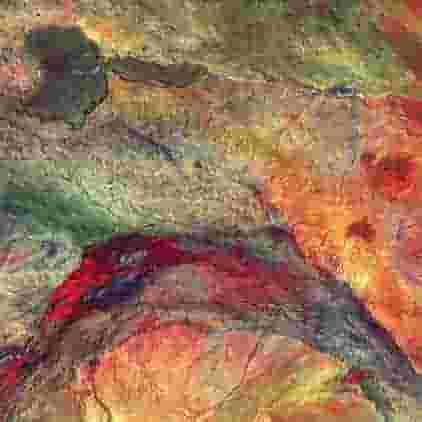
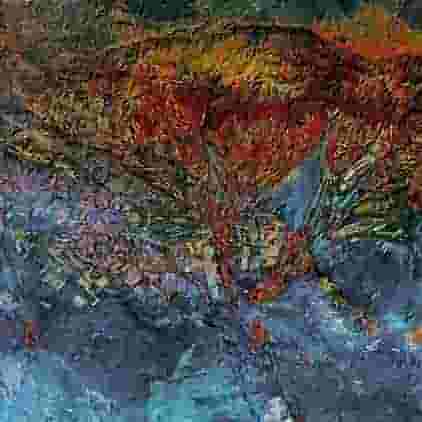
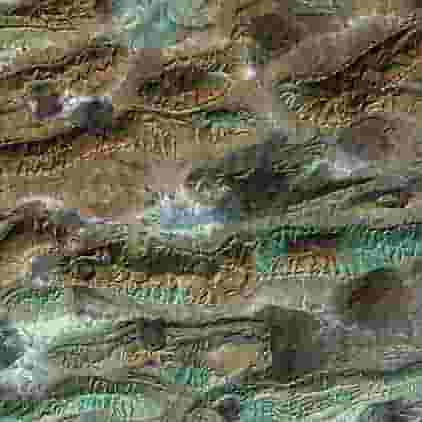
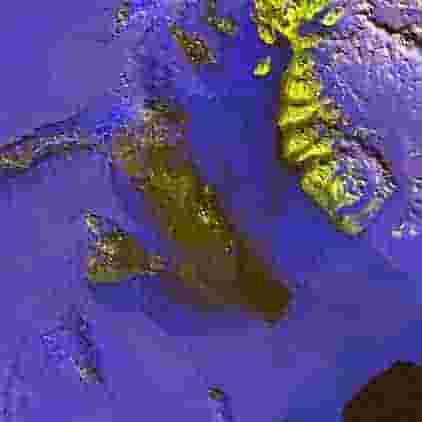
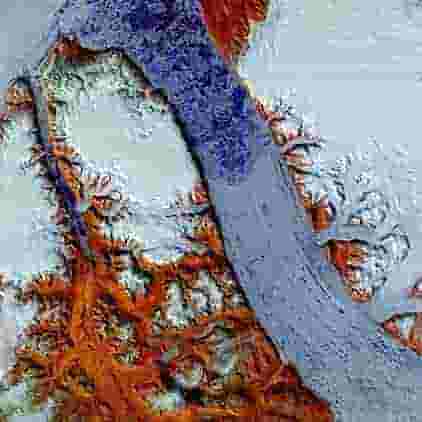
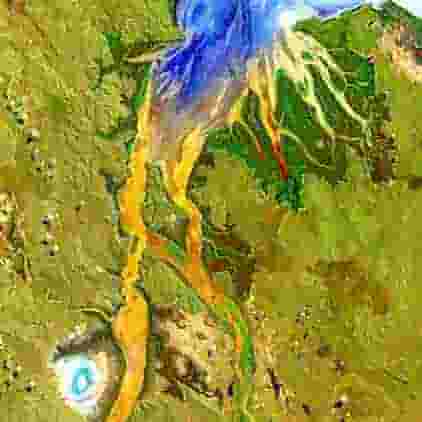
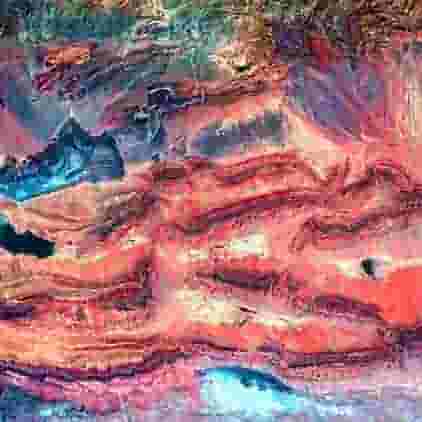
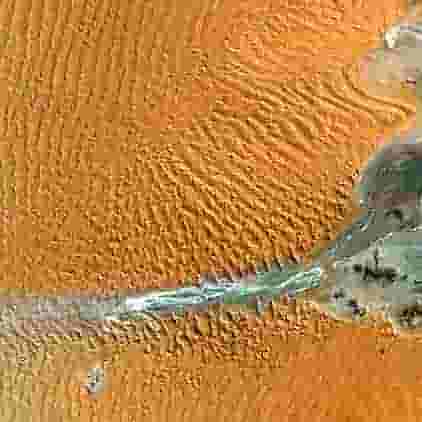
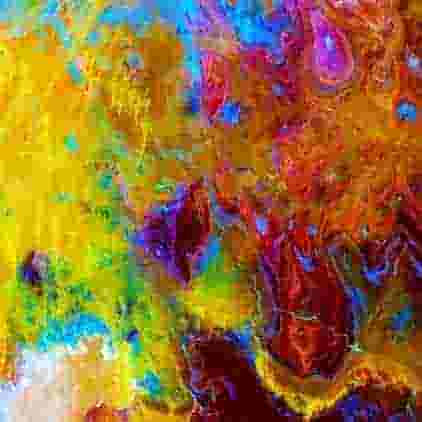
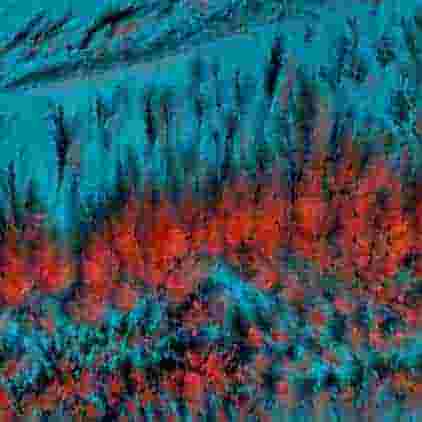
The Earth Resources Observation and Science (EROS) Center's mission is to document and analyze changes to the Earth Land Areas, across the United States Nation and around the world. To study land change, EROS researchers utilize a vast database of images of the Earth Surface, including those acquired by Landsat satellites. EROS maintains the largest, continuous, civilian record of the Earth's land areas in the form of satellite images and other types of remotely sensed data that are fundamental to land change research. We acquire thousands of new images every day.
Millions of satellite images, aerial photos, and other types of remotely sensed data of the Earth's land areas are available from EROS--easy to search for and download with user-friendly tools. Most are available free of charge.